
Expert Treatment for Fistula-in-Ano by Dr. Yaswanth Tummala | Vijayawada

Get expert treatment for fistula-in-ano
An anal fistula is a small tunnel that connects the inside of the anal canal to the skin near the anus. Most fistulas develop after an anal abscess (a collection of pus) bursts or is drained.
Medically reviewed by Dr Yaswanth Tummala, updated Oct 2026
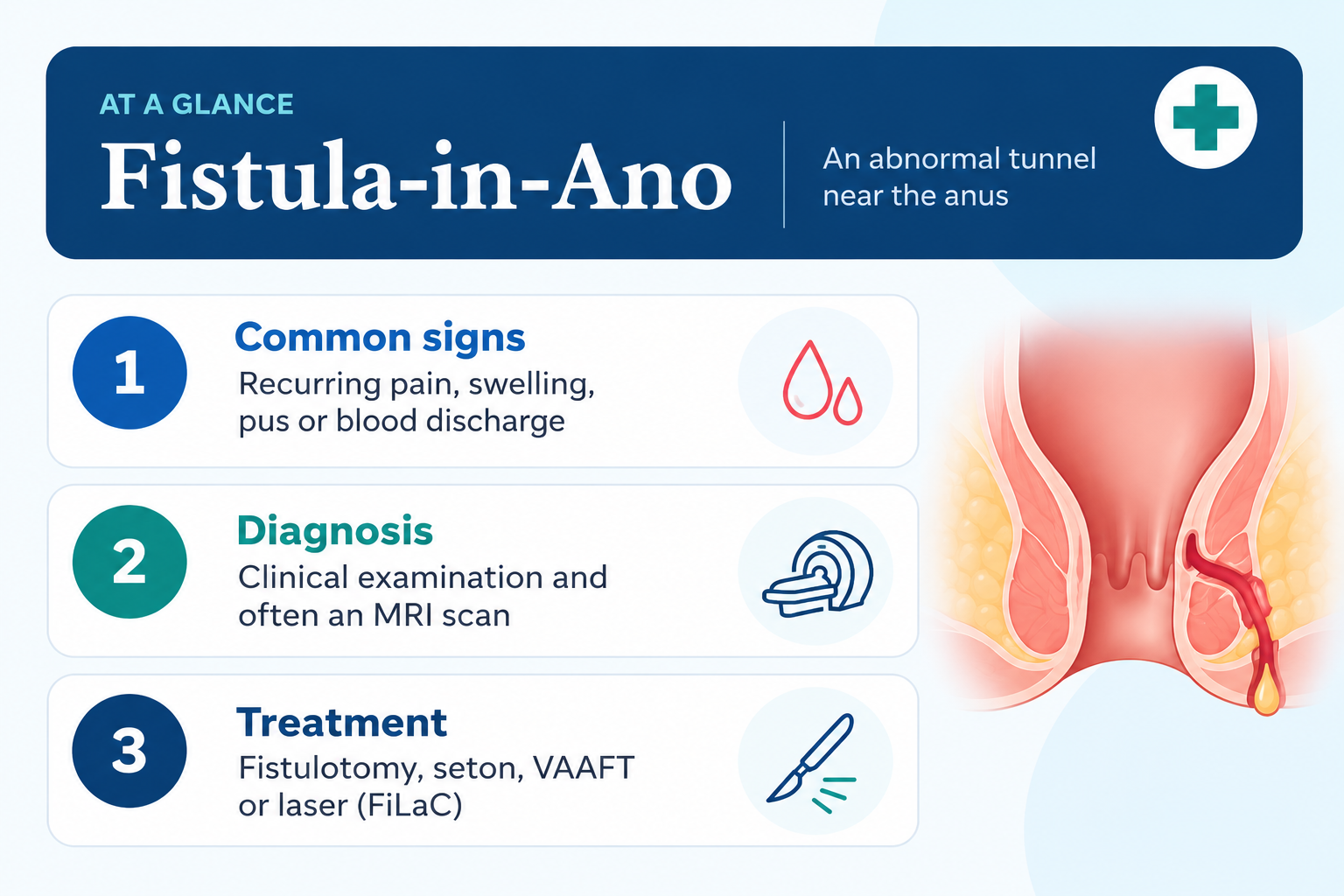
Symptoms
- Repeated swelling or boils near the anus
- Discharge of pus or blood that stains underwear
- Pain and irritation around the anus
- Fever when the area becomes infected
Diagnosis
The doctor examines the area to find the external opening. An MRI scan of the pelvis is often used to map the fistula track accurately before surgery.
Your treatment options
Fistulas rarely heal with medicines alone. The type of surgery depends on how the track runs in relation to the sphincter muscles that control continence.
Surgical treatment
- Fistulotomy for simple, low fistulas
- Seton placement for complex fistulas
- VAAFT (video-assisted anal fistula treatment) for selected cases
Laser and minimally invasive treatment
FiLaC (fistula laser closure) uses a laser fibre to close the track from inside while protecting the sphincter muscles.
Ask if this suits youRecovery
Recovery depends on the procedure. Most patients return to normal activity within 1 to 2 weeks; complex fistulas may need staged treatment.
- Day 1Light diet and wound care instructions
- Week 1Return to light work for most patients
- Weeks 4–8The track heals from inside; regular check-ups
Typical recovery. Your own timeline depends on your health and the procedure chosen.

Discuss your treatment with Dr Yaswanth Tummala
Every patient is different. A consultation is the best way to understand your condition and the options that suit you.